Yes, this is a mid-size demo web app with XMPP, more specifically, combination of Strophe, exmpp, ejabberd on Amazon EC2. The purpose of this exercise was to create a "proof of concept" and prepare myself for more serious projects. The demo is now
available online , go ahead and check it out. You could either use predefined account (username: acc1, password : acc1), or register your own. Choose weather stations from right-hand panel and watch your browser being updated in a real time with data coming from (fake) weather service. Clicking on station's icon will toggle subscription, green arrow icon meaning the account is currently subscribed to that station. You will also see (normally quickly passing) blue icon meaning station is waiting for updated subscription status from the server. The demo is in early beta (if I can say this about demo at all), some features, such as live network status and live support are coming soon.
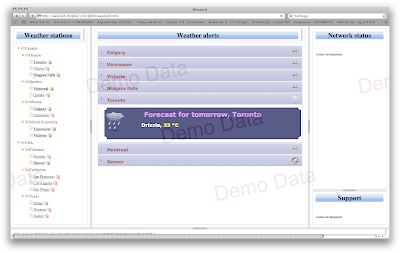
The app is very dynamic. Try this: open 2-3 windows with the same account and watch subscription changes you're making in one window instantly showing up in others. This is a nice feature that could be used for real-time collaboration. It's possible to imagine a number of applications that need real-time updates and collaborations of that sort: trader floors, stock tickers, asset tracking, order fulfillment, arrivals/departures, ticket reservations, chats, tweets, you name it.
It's not surprising that Google have chosen XMPP as core protocol for the Google Wave.
What's the big deal, you might ask? We have been using dynamic Ajax-based apps for a while now. This is a better Ajax, though, as it uses XMPP over HTTP (BOSH) protocol. You can read about it in details
here and
here. Briefly, most Ajax applications are using polling, which is poorly scalable and resource-hungry technique. Javascript libraries that employ BOSH, on the other hand, are using Ajax with "semi-permanent" connections, keeping them alive until server really has data to send to the client.
And, with Javascript libraries supporting BOSH, such as Strophe or jsJac, plus JQuery, "
We Don't Need No Stinkin' Web Frameworks" :-)
The XMPP-specific features having been implemented/used in the demo:
- in-band registration;
- service discovery;
- roster push handlng;
- presence notifications and subscription handling.
In the next few days, I'll go over setting all things up on EC2, which is no small feat, at least it wasn't for me :-) I'm also planning to add some more features, such as self-restoring after disconnections and crashes, both on server and browser sides. As usual, your input is appreciated and welcomed.
The source (HTML/JS/Erlang) is available
here.
P.S. Please remember this is a fake data, so don't use it for planning your weekends, although I have taken care not to show "Heavy Snow" icon during summer. I might be not that far off from official weather feeds, though :-) One day I might just take a real feed and turn that demo into something useful :-)


